

In the U.S., it has become increasingly common for people to end up overweight, with one in five adults suffering from obesity. People living in low-income areas are seeing the fastest rise in the rate of obesity, according to North American Communication Hub. Grocery stores have started to offer more unhealthy food options for cheaper prices, making it easier for people to slip into unhealthy diets and eating habits.
According to the National Heart, Lung, and Blood Institute, obesity is defined as increased body weight caused by excessive accumulation of fat.. Obesity can be caused by many different factors, internal and external. Each person carries a different level of risk for obesity, depending on their lifestyle, income, and cultural norms. Stress is a major factor, as higher stress levels can change a person’s eating habits dramatically. Additionally, some medications, such as antidepressants and birth control, can lead to obesity from the increased appetite, changes in metabolism, and hormonal fluctuations. Obesity can lead to many different health complications, one of these being heart disease and/or failure.
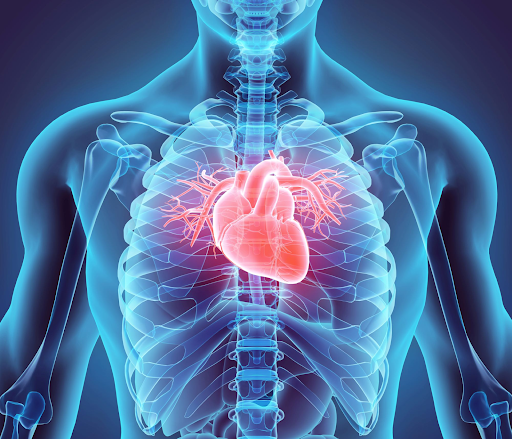
Excessive fat can lead to a structural or functional abnormality in the heart–when there is build-up in the heart’s structures, or in the blood vessels that supply the heart with blood, causing normal functioning to become impaired. This can cause blood clots in the heart, which can lead to lethal strokes or heart attacks.
With one in five adults having undiagnosed heart disease, they might not recognize the symptoms. Symptoms vary with each stage, which are in order of severity. According to the National Health Service, the symptoms are in alphabetical order. First, stage A’s symptoms are “high risk for heart failure but without symptoms or structural heart disease.” Stage B’s symptoms are “structural heart disease present, but no symptoms of heart failure.” Stage C’s symptoms are “current or prior symptoms of heart failure with underlying structural heart disease.” Finally, stage D’s symptoms are “advanced heart failure with severe symptoms at rest. requiring specialized interventions”.
The stage scale is used to display the risk level of heart failure, but there are also classes to describe symptoms. According to the National Heart, Lung, and Blood Institute, the symptoms of class one include little to no fatigue or shortness of breath. Class two’s symptoms are slight limitation of activity but fine at rest. The symptoms of class three are struggles with normal activity but okay at rest. Lastly, class four is unable to do any physical activity without pain and even possibly when at rest.
To wrap it all up, people need to eat well, exercise, and listen to their bodies to the best of their abilities in order to make sure that their bodies stay healthy.


