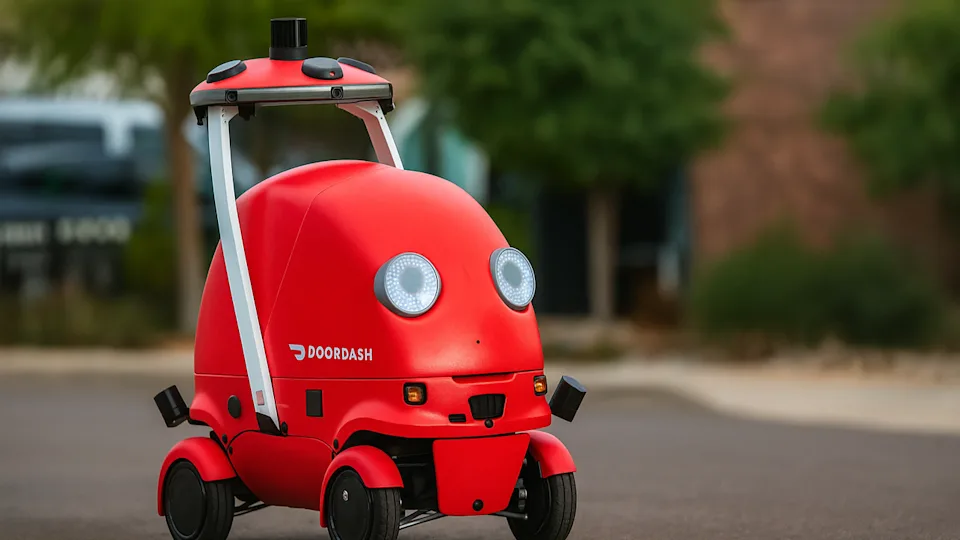
On Sept. 30, 2025, a lovable robot named Dot was created as a Doordash delivery device. Dot was designed with big eyes, round shapes, and friendly sounds so humans feel comfortable enough with them.
In other major cities, these robot deliveries have been gaining their own names and facial expressions. Along with this, passerbyers help it in any way they can by either pushing crosswalk buttons, navigating debris, and even wishing them luck.
The week of Feb. 15, Los Angeles had a rain storm and this little robot was caught in water and debris. An instagram video posted by mona.the.pa said “She’s doing her best, you guys… I’m so sad.” according to NBC News.
These robots haven’t only been on the streets though. These Artificial Intelligence (AI) tools appear in households and public areas for cleaning, cooking, and security. Due to the increased popularity of these robots, manufacturers decided to make them more likeable by humans; with big eyes and pet-like features.
A robot engineer that focuses on tool and human interaction, Ellie Sanoubari, stated that “If you were a robot developer or designer, you would certainly not want your product to be threatening. You would want people to feel comfortable,” according to NBC News. These types of robots would be used in factories for production, so cuteness and lovely features were not necessary.
Vice president of autonomy for Doordash, Ashu Rege, said that while he was helping build the device, he wanted to make it seem to people of all ages that it was more of a pet rather than an AI assistant. In order to get his point across, he created cute features such as big eyes and a round body.
Though, with the rise of electronics such as robots, several warnings have been sent out towards people about the habits others have with Chatbots could also continue with robots. On the contrary, parents have been complaining about AI-powered toys and devices due to privacy, loose guards, and inappropriate conversations. Experts warn that as robots become more like pets or companions along with kids or the elderly becoming too emotionally attached to machines.
In the end, the 21st century will be filled with robotic leveling up and more dangers with attachment issues.