There has been a series of conflicts in Sudan involving the Sudanese Armed Forces (SAF) and the Rapid Support Forces, (RSF), a civil war with containment of coupes and sieges ultimately contributing to this wide spreading humanitarian crisis, according to the United Nations, the largest crisis yet.
Ethnic and religious diversion has been an ongoing problem in Sudan, more so, the religious and ethnic differences between the North and the South. As stated in the Sudanese American Physicians Association, the North contained Arab-Muslim identities while the South contained African-Christian identities, sparking two civil wars. The first civil war was ongoing from 1955-1972, and the second civil war happened from 1983-2005, costing three million lives in total. These civil wars contained tension, even after the matter, leading to the rise and action of conflict today in Sudan. But, not just these conflicts sparked battle, but also colonialism, which played a huge role in the problems of Sudan currently.
As shown on BBC, tensions arose in 2019 following President Omar al-Bashir who had earned his power through a coup performed in 1989. Along with this was a formed joint military-civilian government, established in Aug. 2019. This was also overthrown by a coup in Oct. 2021, which was staged mainly by “Abdel Fattah al-Burhan, the head of the armed forces and in effect the country’s president, and his deputy, RSF leader…Mohamed Hamdan Dagalo, better known as Hemedti”, stated on BBC.
Unfortunately, these tensions developed into actual shots fired on April 15, 2023 between the RSF and the SAF. According to Migration Policy Institute, this war had already claimed 150,000 lives by June of 2024.
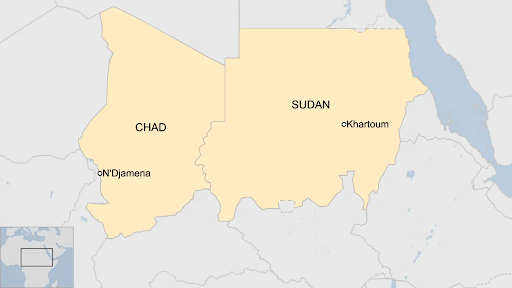
The RSF performed a tactic called a “siege”. They have been using this tactic to possibly get the SAF to surrender by surrounding Sudan’s capital, Khartoum and cutting off major supplies needed for survival by the civilians.
Since the ongoing siege in 2023, international authority has declared famine in multiple parts of Sudan such as El Fasher, South Kordofan, and North Darfur. This is being taken seriously as famine has only been declared twice and is the most severe form of hunger crisis. As reported by the United Nations, there are currently over 21 million people experiencing famine across Sudan.
Another large effect of the active siege is displacement. According to The UN Refugee Agency, nearly 13 million civilians have been displaced from their homes as of April, 2023. Displacement problems have been reported since 2003. These civilians have been seeking help from neighboring countries such as Northern Ethiopia, South Sudan, and Tigray.
With famine having spread across the entirety of Sudan, there have been more obstacles because of this conflict, creating a deeper hole for the Sudanese people to dig out of health and economy wise. The lack of resources have caused civilians to even go as far as eating animal feed just to survive. As Fatima Yaqoub, a displaced mother, has stated on PBS News, “We are suffering so much from no food, no water. We are hungry. Our children are naked. We have nothing to eat but animal feed. There is no water. We have nothing”.
Fortunately, there are ways people can help with this ongoing extensive problem. People can donate to a United Nations organization called “Sudan Emergency”. These donations will help contribute to the additional $662 million dollars needed to help with reaching more civilians with critical resources to combat the conflict.
Overall, there have been unfortunate events happening in Sudan, mainly displacement, war, and famine in effect of the tension between the SAF and RSF, civil wars, and past problems involving ethnic and religious beliefs.