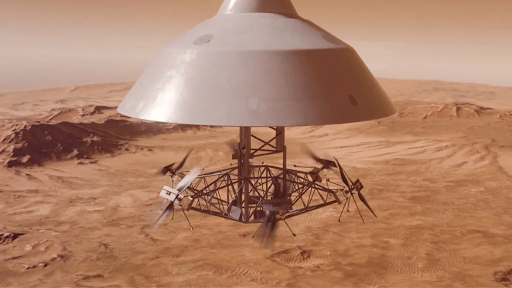
During the “Ignition” event at the Kennedy Space Center in Florida on Tuesday, the National Aeronautics and Space Administration (NASA) revealed their plan to send drones to Mars with a nuclear powered rocket just a few days before the launch of Artemis II. If nuclear power helps save time and money on spaceflight, it could change the industry forever.
According to Space, over the last 60 years, experiments have been conducted to try and use nuclear power for space travel. While other attempts at nuclear travel have used mini nuclear explosions to propel the rocket forward, a different attempt used nuclear fusion in the engines to propel them. The way NASA is using nuclear power by using nuclear fission to generate electricity to then power ion engines to propel the rocket.
Even though this type of nuclear propulsion is new to rocket travel, NASA has been using different nuclear power in their past rockets. According to Space, Radioisotope Thermoelectric Generators, or RTGs, were used before, which worked by decaying plutonium-238, which can last decades.
An ion engine works by ionizing atoms that are parts of gases to produce thrust. While multiple different prototypes of nuclear propulsion have been used in the past, this method is the most promising.
While the hints at a Mars mission were told during the “Ignition” conference, they are still planning to send three other spacecraft to the moon, making people wonder how long it will take to make a fully functional base on the moon.